Jersey
The world's most efficient dairy breed per pound of feed. Our A2/A2 Jerseys produce the cream that makes our dairy products exceptional.
4.5–5.5%
Butterfat
3.8–4.0%
Protein
Jersey Island
Origin
A2/A2
Genetics
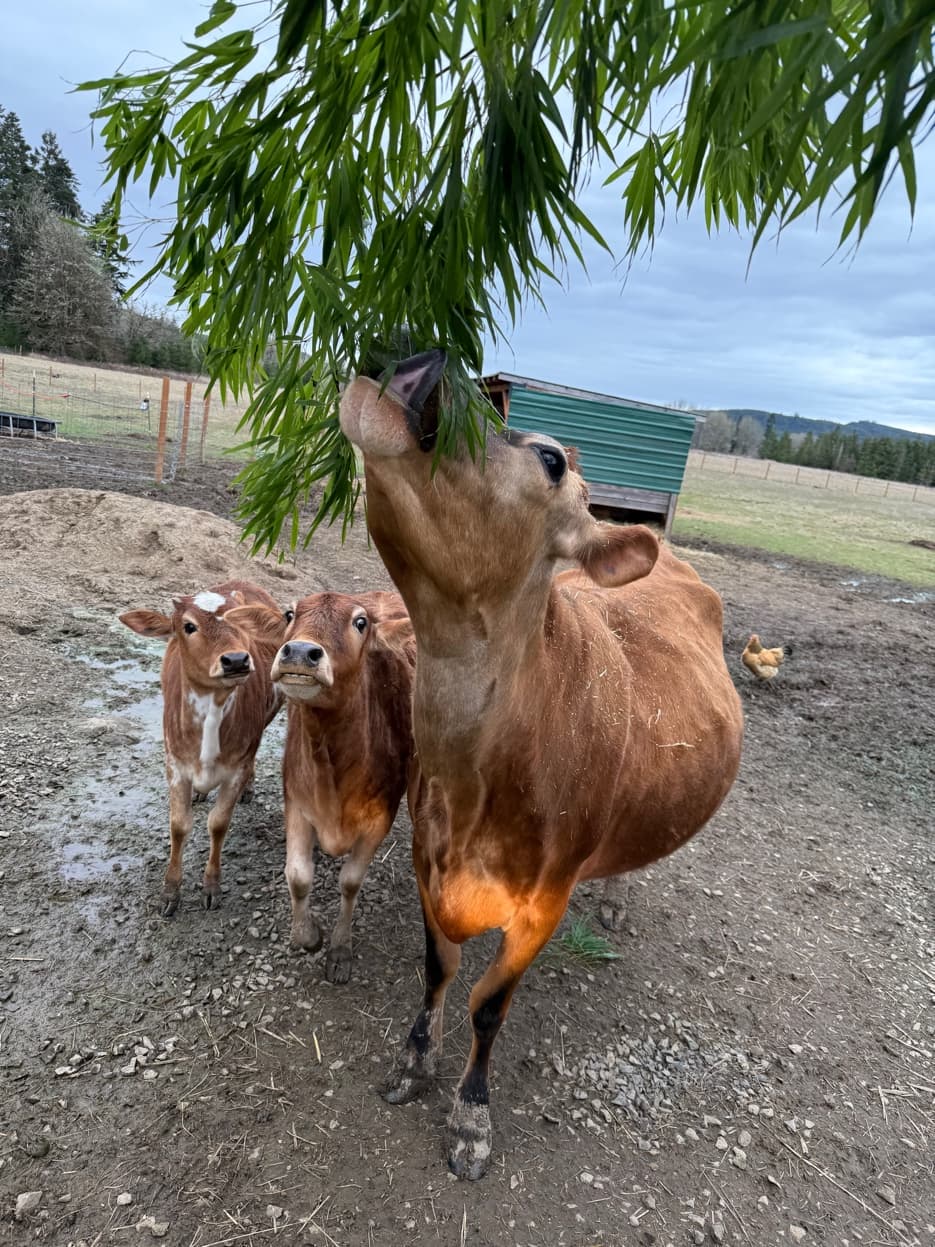
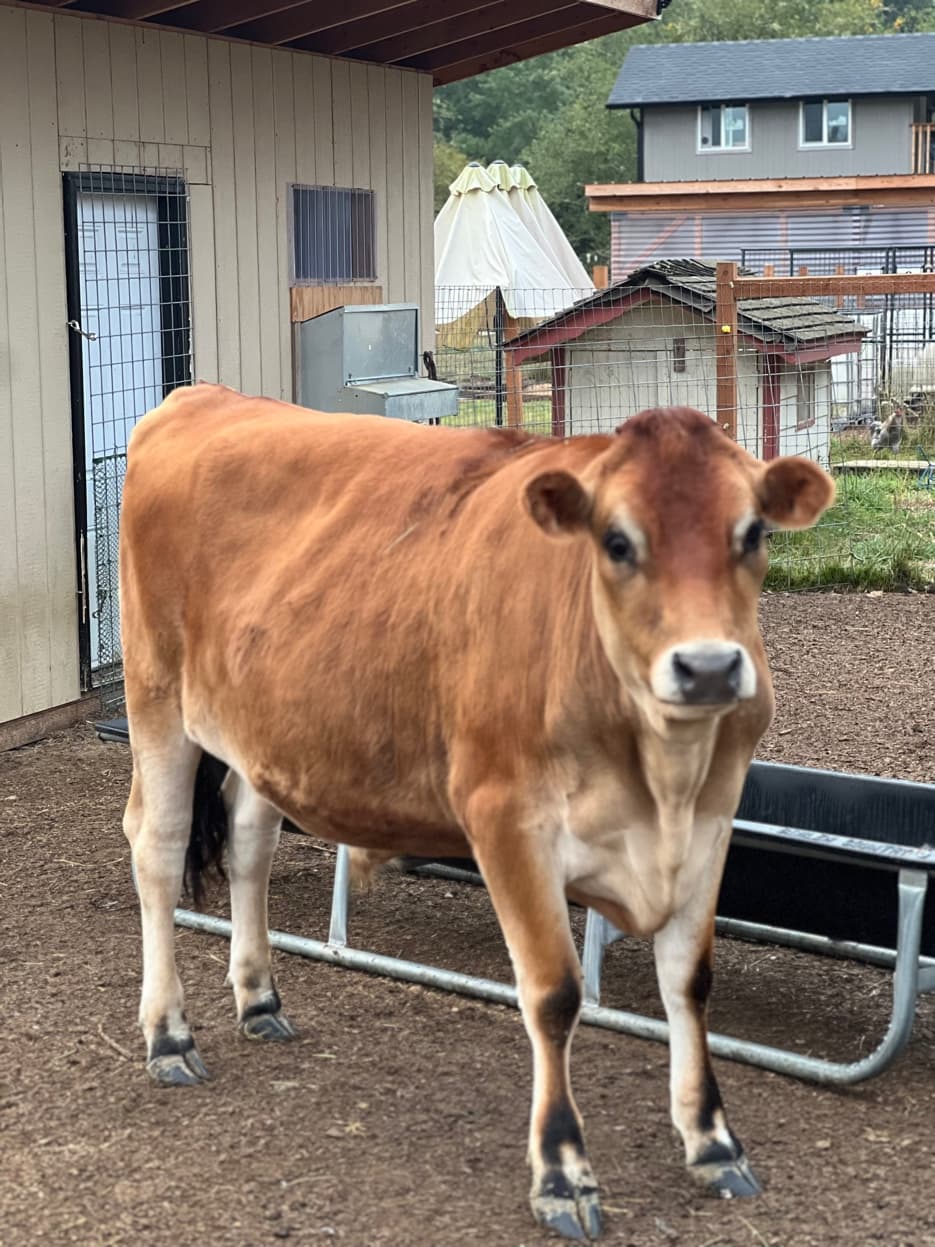
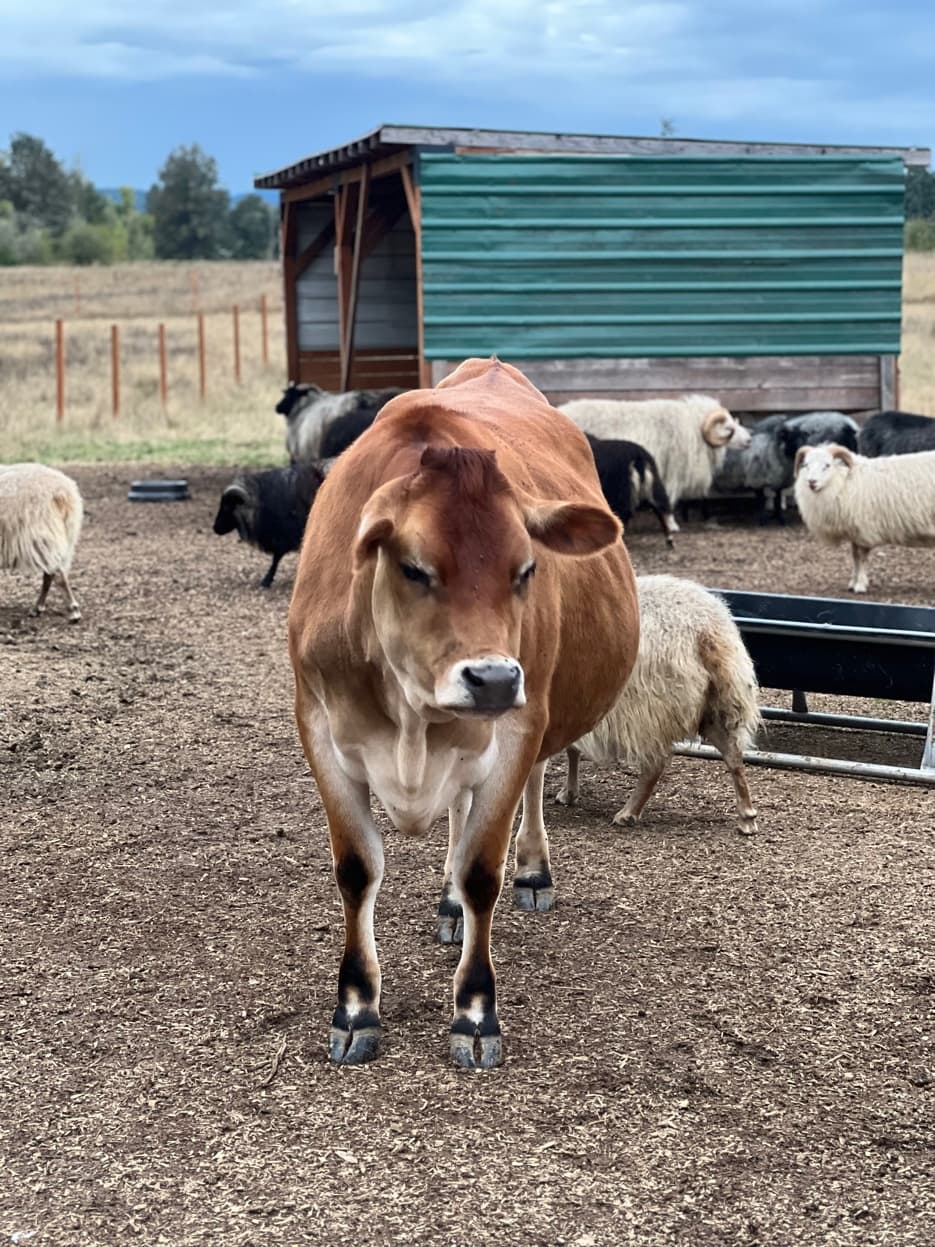
Why We Added Jerseys
Christine's niece has low-functioning autism and cannot tolerate conventional dairy. A2/A2 cow milk changed that. We added A2/A2 Jersey cows and Zebu specifically for their beta-casein genetics — a protein variant that many people with conventional dairy sensitivities can consume without issue.
The other reason: cream. Goat and sheep milk is naturally homogenized — the fat doesn't separate. Cow milk separates readily, giving us heavy cream. That cream is what makes our ice cream genuinely creamy, our butter possible, and our aged cheeses richer. The Jerseys are the missing ingredient for the full range of dairy products we're building toward.
What Is A2/A2?
All cattle produce milk with beta-casein protein, but there are two main variants: A1 and A2. Most modern commercial cattle — particularly Holsteins — predominantly produce A1 beta-casein. Older breeds like Jersey, Guernsey, and many heritage breeds more commonly carry A2 genetics.
When A1 beta-casein is digested, it can release a peptide called BCM-7 (beta-casomorphin-7), which some research suggests may contribute to digestive discomfort in some people who believe they are lactose intolerant. A2 milk does not produce BCM-7 during digestion.
A2/A2 designation means the animal carries two copies of the A2 gene — both alleles. This ensures all their milk contains only A2 beta-casein. We specifically selected A2/A2 tested animals for our herd.
History & Origin
Jersey cattle originate from the Island of Jersey in the English Channel, where they developed in isolation over several centuries. The island's strict agricultural laws — historically prohibiting the importation of cattle — created a closed breeding population that became one of the most genetically distinct and productive dairy breeds in the world.
Jersey cattle were first exported to England in the early 19th century, arriving in the United States in the 1850s. Their efficiency — producing more pounds of butterfat per pound of feed than any other breed — made them immediately valuable to American dairy farmers, particularly in the Northeast and Mid-Atlantic states.
Today Jerseys are the second most common dairy breed in the United States after Holstein. They remain dominant in New Zealand (where their efficiency on pasture is unmatched), and their A2 genetics make them increasingly sought after as consumer interest in A2 milk grows globally.
Contributions to Humanity
Most Efficient Dairy Breed
Jerseys produce more milk solids — butterfat, protein, lactose — per pound of feed than any other dairy breed. On a pasture-based system, their efficiency is exceptional. This is why they dominate New Zealand's export dairy industry.
Cream & Butter Tradition
Jersey milk's high butterfat (4.5–5.5%) made it the preferred breed for butter and cream production before industrial dairying standardized on Holstein volume. Jersey cream and butter remain sought after in artisan markets.
A2 Genetics
As predominantly A2/A2 animals, Jerseys are central to the growing A2 dairy movement globally. Their combination of high production and A2 genetics makes them the most commercially valuable breed for dedicated A2 dairy programs.